AI Storyboarding Still Needs Human Decisions
AI can make visual options arrive quickly. It cannot decide which option belongs to your film.
Start with intention, not a prompt
Define the beat, point of view and information in the frame before describing its surface. Ask whose experience controls the shot and what changes by the cut.
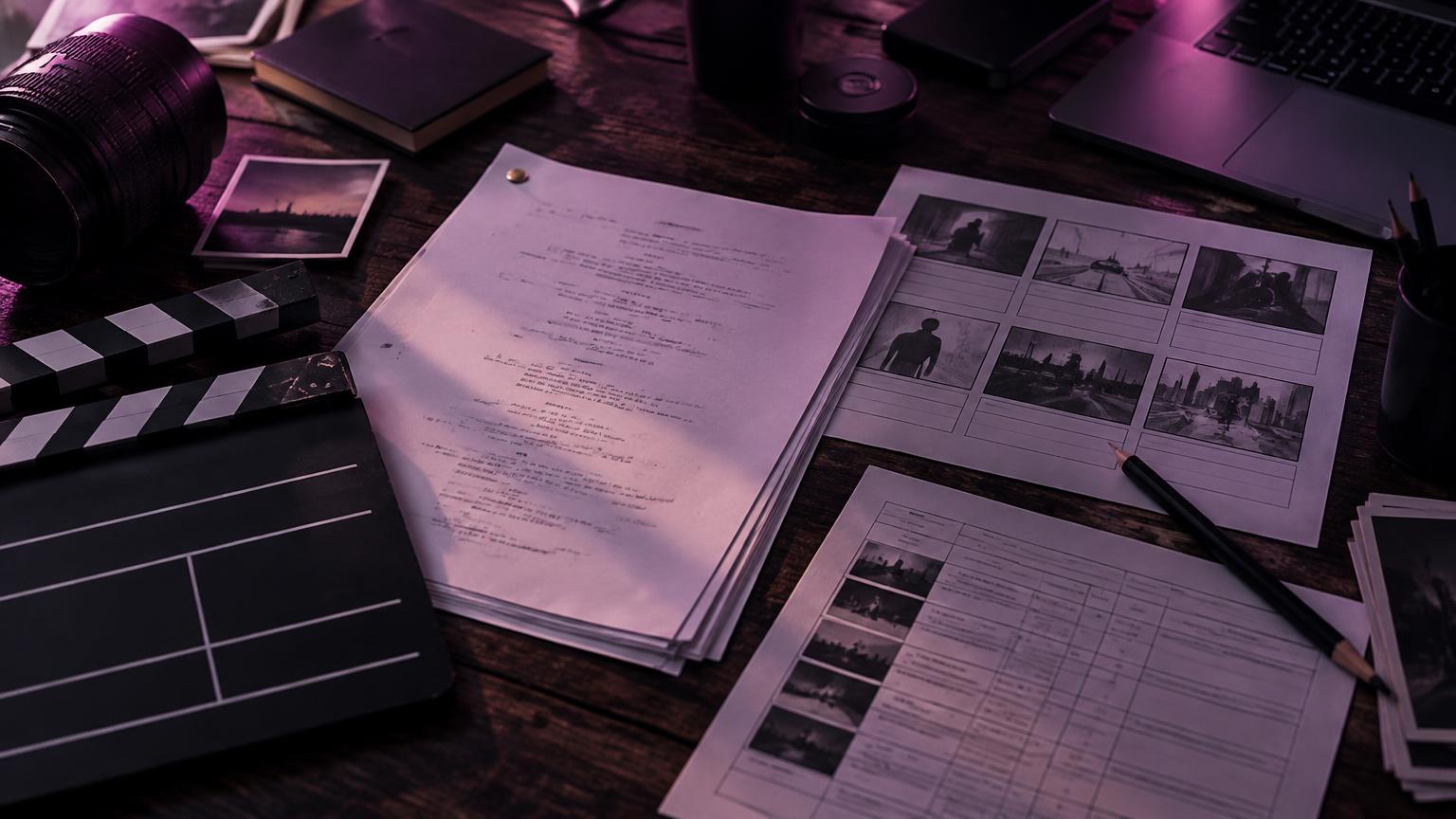
Boards stay useful when they are tied to the page, which is why we recommend starting from a properly formatted screenplay.
Hold visual rules steady
Agree on aspect ratio, lens character, camera height, contrast, color logic and spatial geography. Consistency makes generated frames useful as a sequence rather than a collection of attractive images.
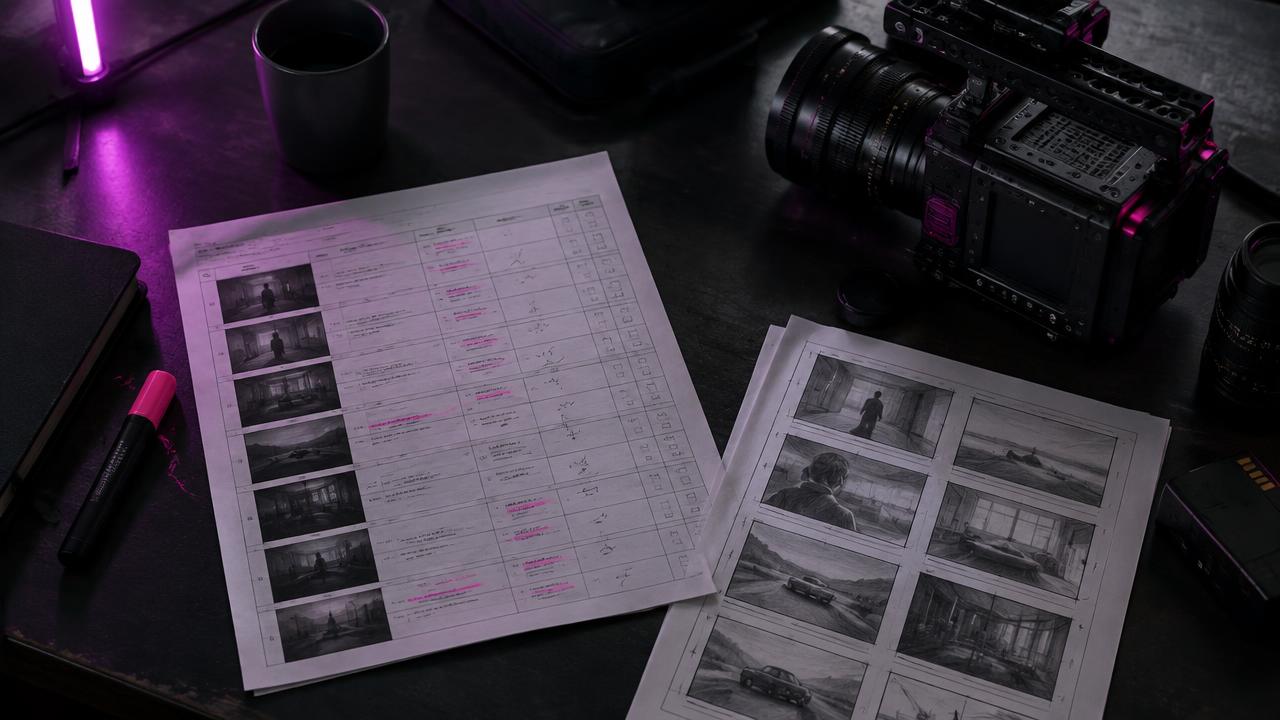
You can also plan camera angles and shot sizes in your storyboard before anyone reaches set.
Judge continuity deliberately
Check character position, eyelines, screen direction, props, light direction and time of day. A plausible single frame can still break the sequence around it.
Generate alternatives that answer a question
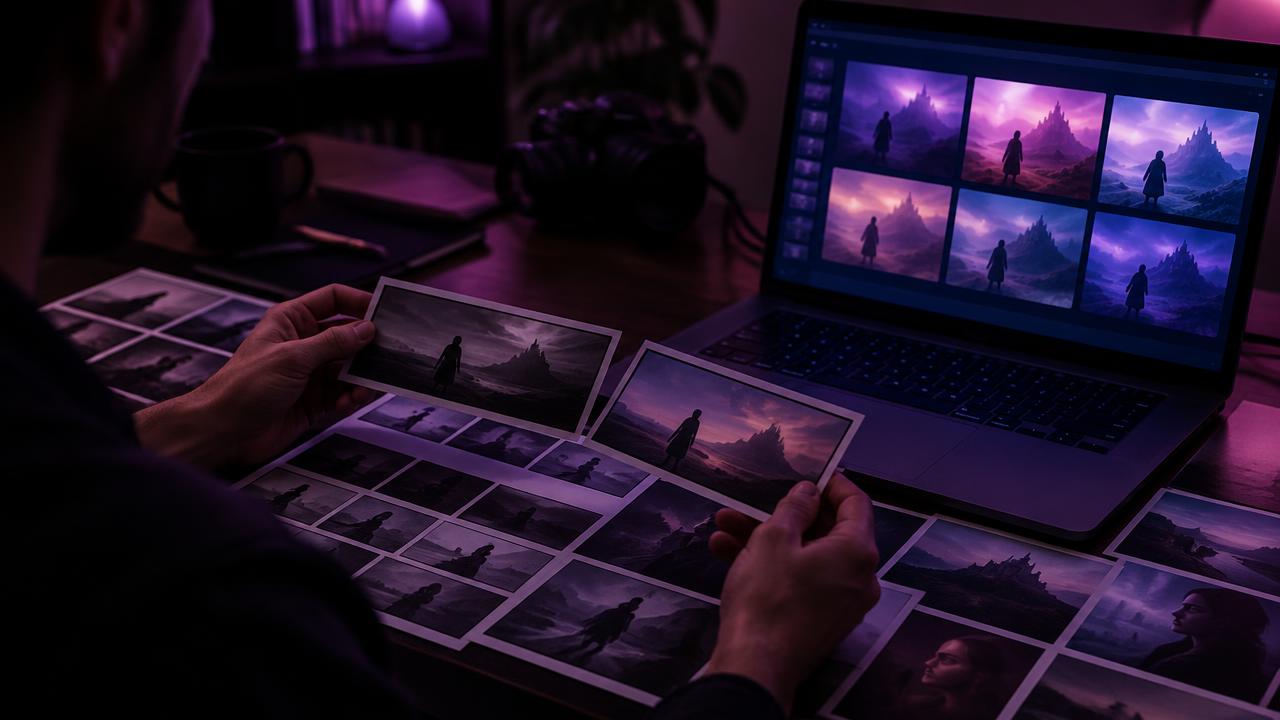
Explore meaningful choices: intimate or observational, static or unstable, reveal now or delay it. Avoid producing volume without a decision to make.
Treat the board as a conversation
Use AI storyboarding to make intent visible to collaborators. Invite the cinematographer, designer and editor to challenge the plan before production makes changes expensive.
The value of speed is not more images. It is more time to compare, reject, refine and commit to a visual idea that serves the story.
Try it in Pzaz