What US Filmmakers Value in Screenwriting Software: 2025 Research
Screenwriting software supports everything from formatting and export to feedback and version control. This research examines which capabilities independent US filmmakers discuss and value most; it is not a ranked comparison or buying guide.
We used AI-driven audience profiling to synthesize 6,260,767 opinions expressed by independent filmmakers in US online discussions during the year ending July 7, 2025. The findings describe preferences, frustrations, and discovery habits around screenwriting software. They do not test products or establish which tool is best.
Index
What Film Screenwriting Software Have You Used?
Final Draft and Fade In are the go-to film screenwriting software tools for 28% of independent filmmakers
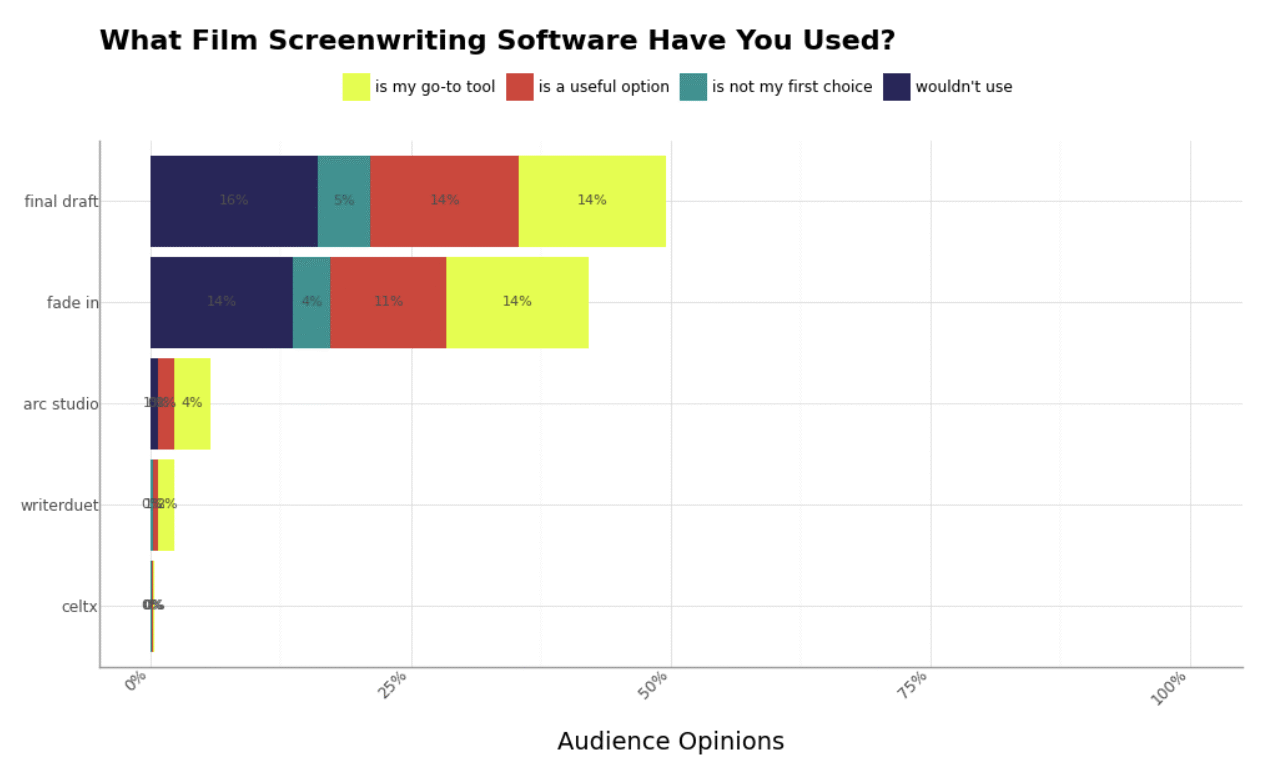
The screenwriting software market is estimated at $500 million in 2025 and projected to reach $1.8 billion by 2033. For this audience of over six million independent filmmakers, two tools stand out as most-used: Final Draft and Fade In. Both are go-to tools for 14% each.
At the same time, a meaningful share say these are not their first choice (5% for Final Draft, 4% for Fade In) or would not use them (16% for Final Draft, 14% for Fade In). Arc (4%) and WriterDuet (2%) appear in smaller pockets.
What Inspires You To Switch To A New Film Screenwriting Software?
Lower cost definitely inspires 27% of independent filmmakers to switch to new screenwriting software
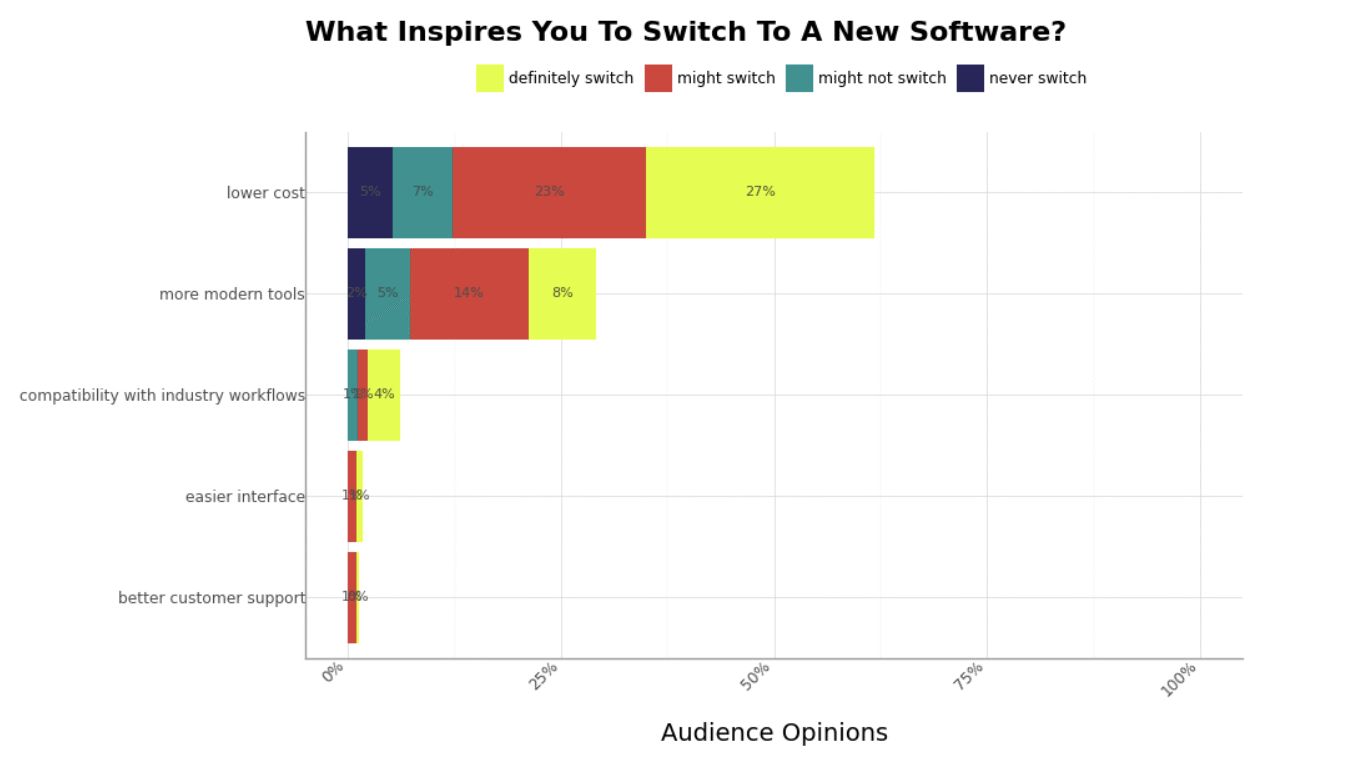
Lower cost is the strongest trigger for switching. 27% would definitely switch for pricing and 23% might switch. More modern tools are also a factor, but secondary compared with cost.
Compatibility with industry workflows, easier interfaces, and better support ranked lower in absolute switching motivation.
Which Film Screenwriting Environment Do You Prefer?
22% of independent filmmakers absolutely prefer a web-based platform for screenwriting
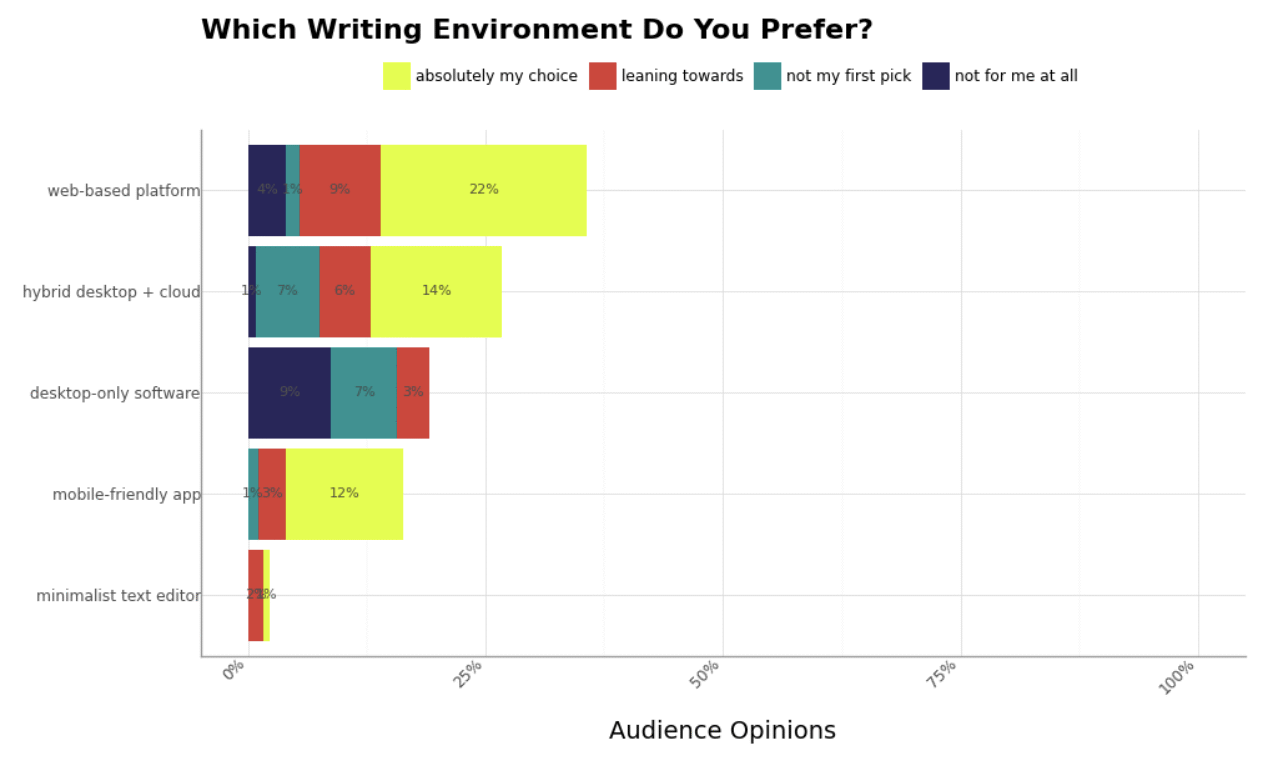
Web-based platforms lead as the preferred environment, followed by hybrid desktop and cloud access. Desktop-only experiences are less preferred, and plain text-editor workflows rank lowest.
Mobile-friendly usage appears meaningful but not dominant in this audience’s first-choice preferences for writing environments.
What Feature Do You Value Most In Film Screenwriting Software?
21% of independent filmmakers agree that cloud-based storage is an absolutely essential screenwriting software feature
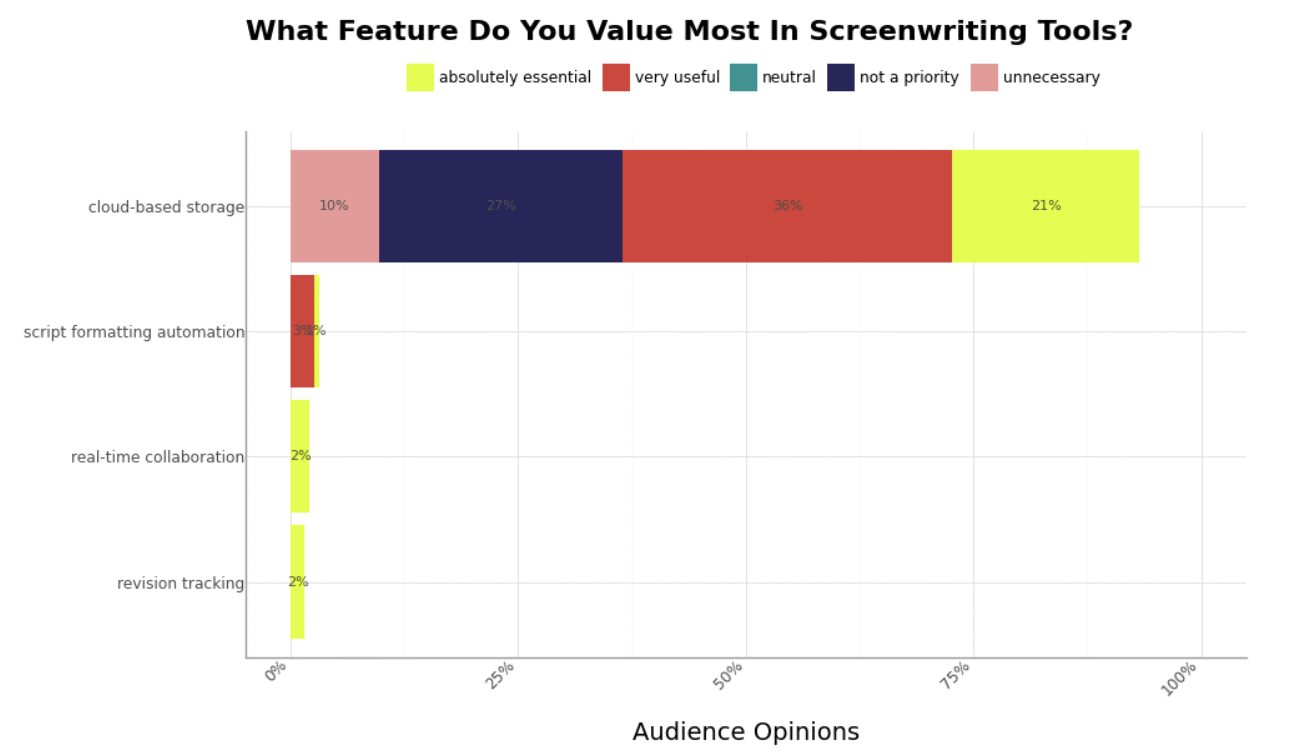
Cloud-based storage is the most valued feature overall, driven by accessibility, autosave, and collaboration needs. Script-formatting automation, revision tracking, and real-time collaboration as separate categories were mentioned less often.
Drafts move faster when the page is ready for the next department — you can import and edit your screenplay online and share it with collaborators the same day.
Which Film Screenwriting Software Export Options Are Most Useful To You?
Fountain format is an absolutely essential screenwriting software export option for 59% of independent filmmakers
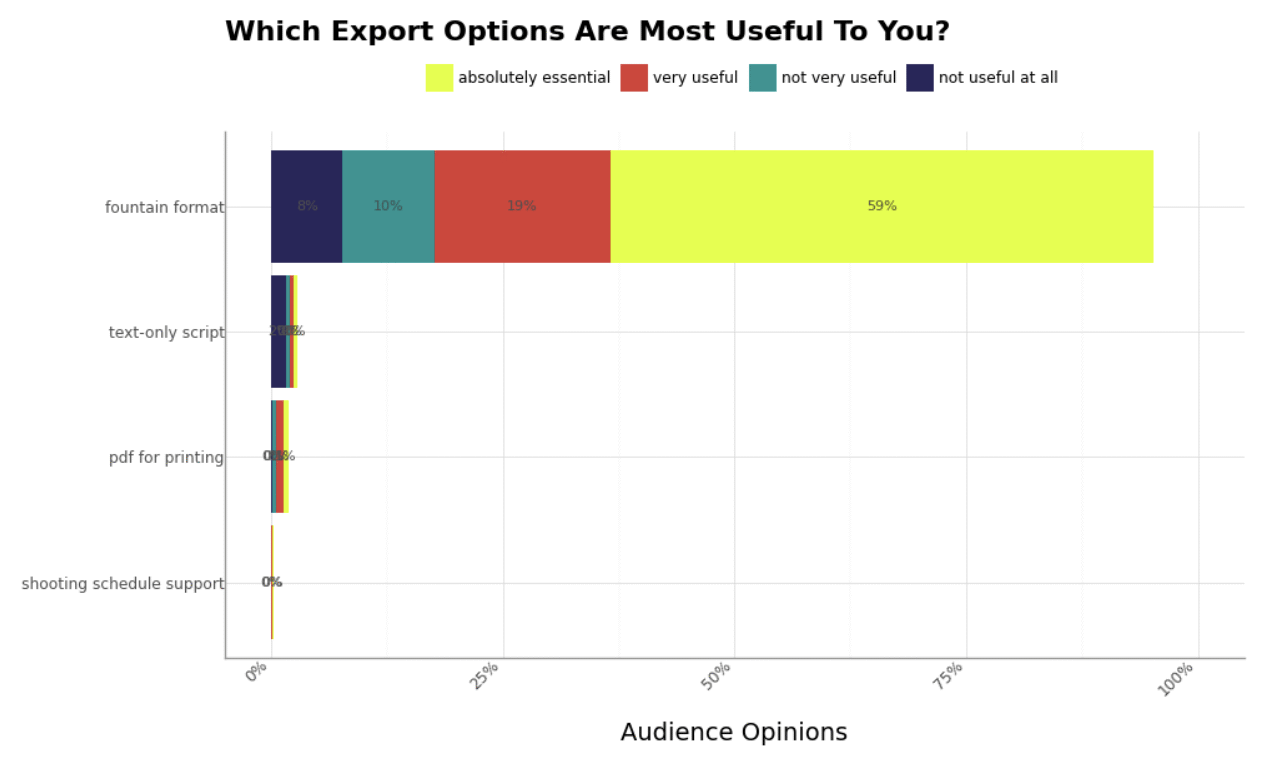
Fountain clearly dominates preferred export formats due to portability, flexibility, and open tooling. Other export options such as print PDF and text-only formats received significantly lower priority in this sample.
What Frustrates You Most About Your Current Film Screenwriting Software?
32% of independent filmmakers find the lack of support resources somewhat frustrating in their current screenwriting software
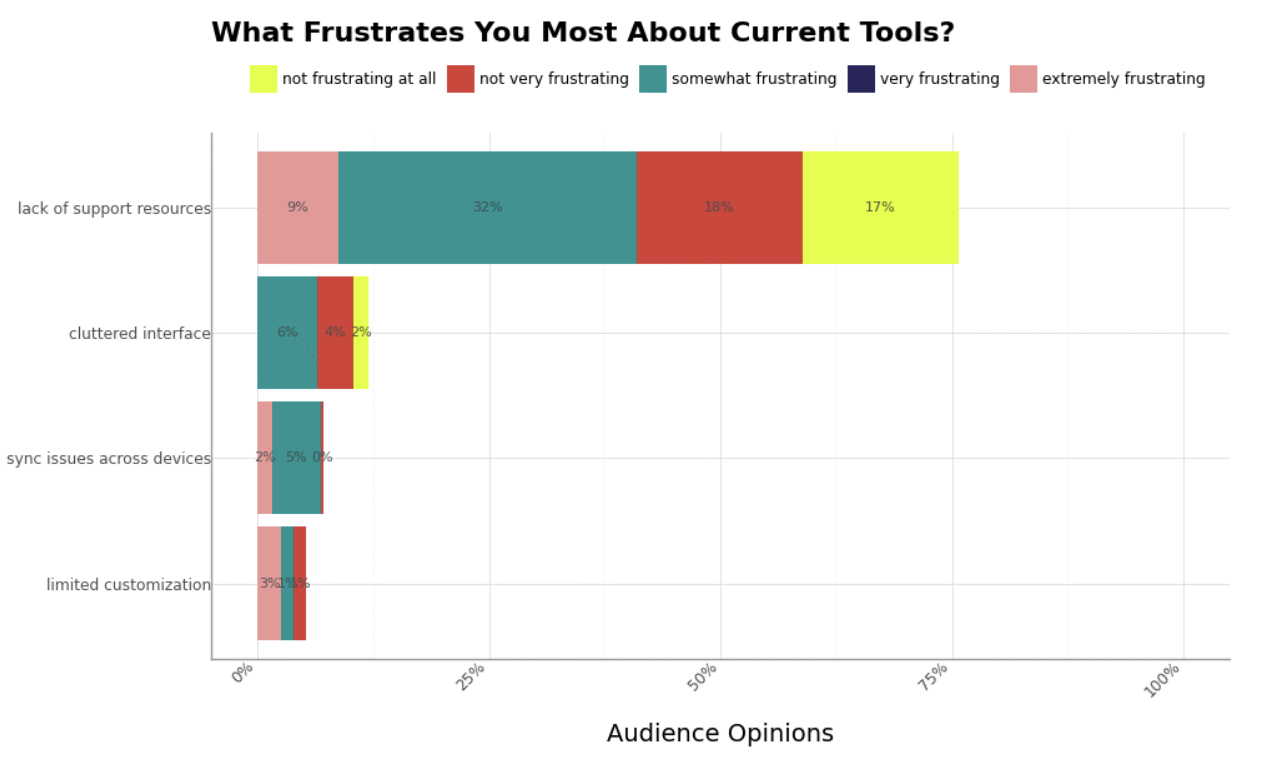
Support quality is a major pain point. Lack of support resources outranked interface clutter, sync issues, and customization limitations as the most frustrating issue.
What Kind Of Collaboration Do You Need Most In Film Screenwriting Software?
Commenting and feedback absolutely essential for collaboration for 76% of independent filmmakers using screenwriting software
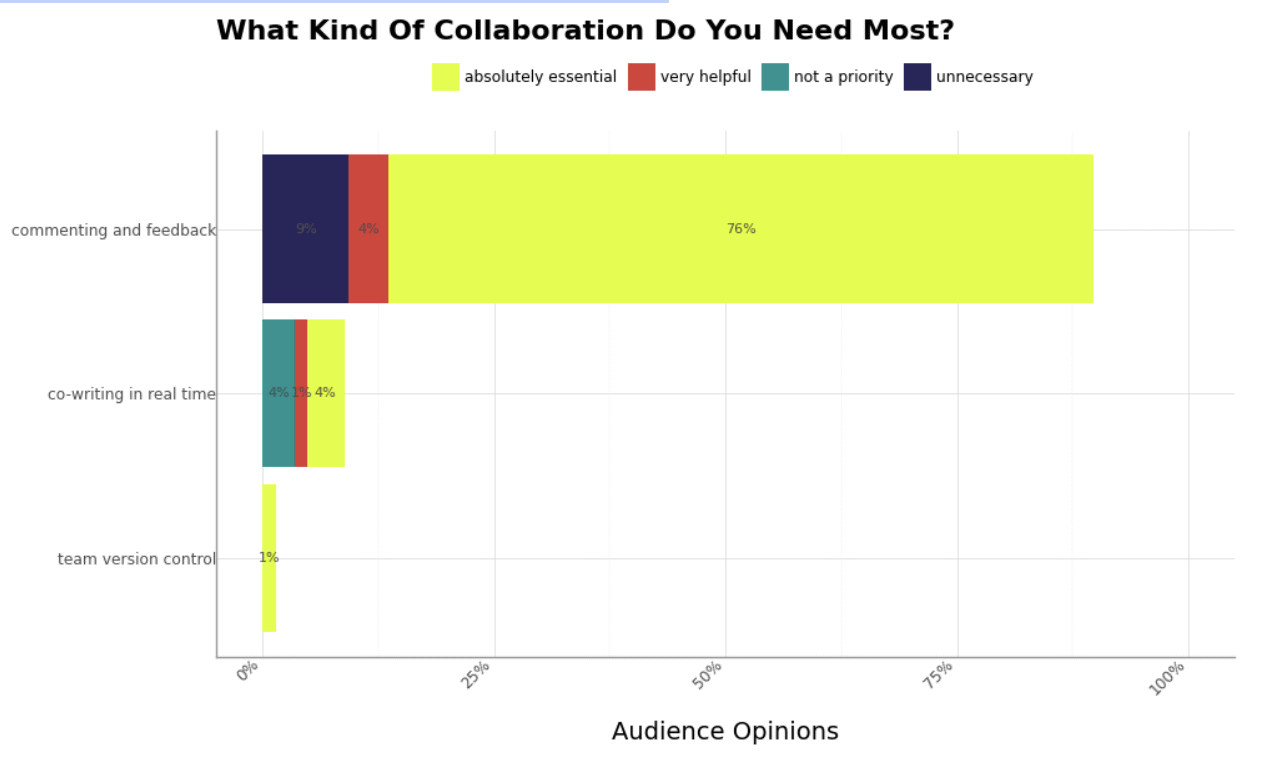
Commenting and feedback are the clear collaboration priority. Co-writing and version-control features matter, but demand is more concentrated around review and feedback workflows.
What Helps Keep Your Screenwriting Workflow Organized?
21% of independent filmmakers agree that a drag and drop structure is essential for keeping their workflow organized
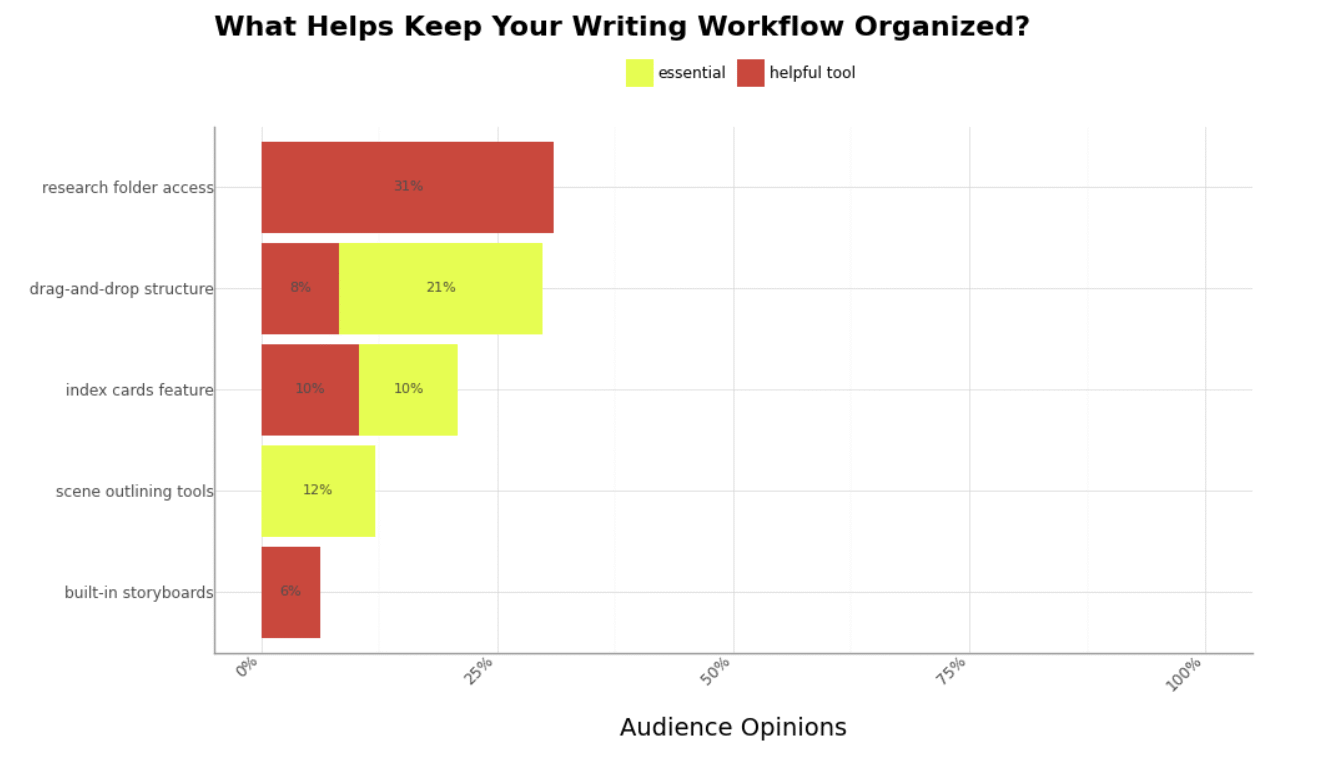
Drag-and-drop structure ranks as the strongest organizer. Scene outlining, index cards, and research folders also contribute, but with more distributed preference levels.
What Kind Of Film Script Formatting Support Do You Rely On Most?
For 24% of independent filmmakers, character prompt suggestions are absolutely essential for film script formatting support
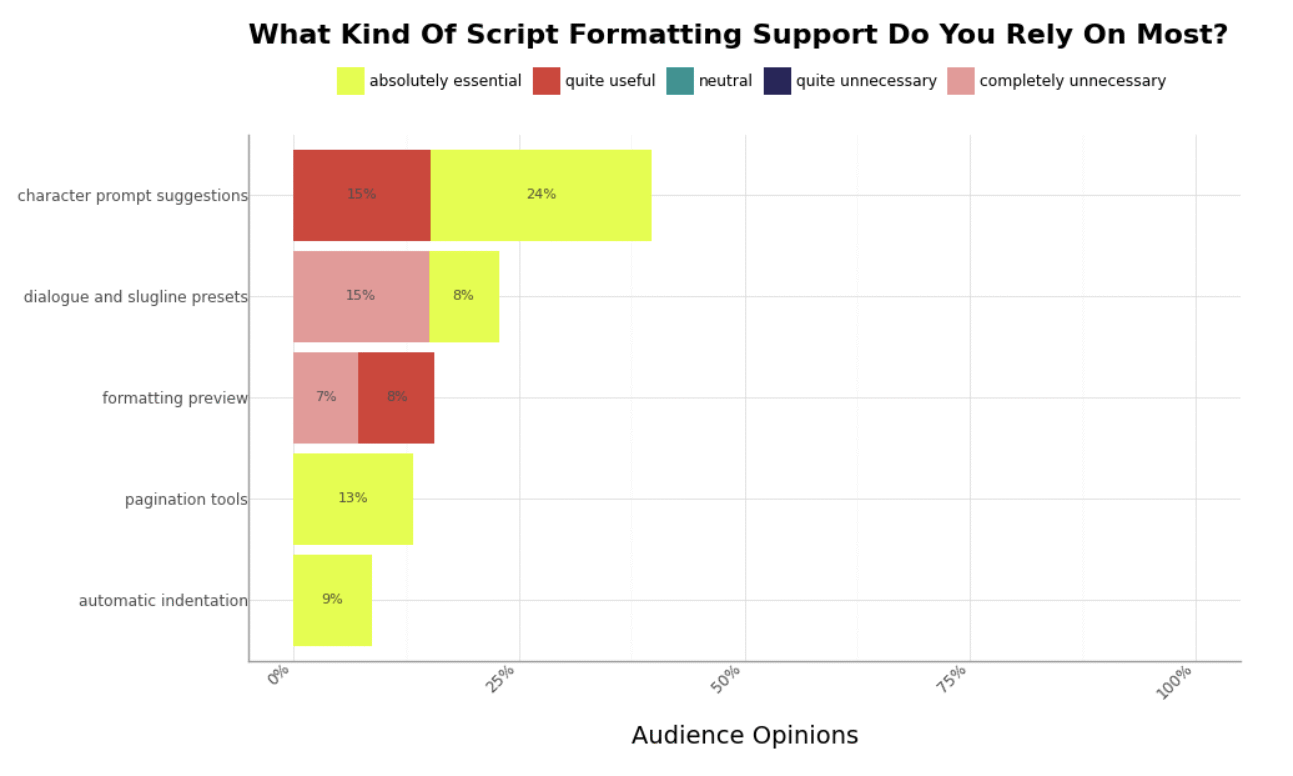
Character prompt suggestions top this category, followed by pagination tools and automatic indentation. Dialogue and slugline presets split opinion more sharply across respondents.
Once the pages are locked, it helps to turn your script into storyboards so the whole team sees the same scene.
Which Aesthetic Do You Prefer In Film Screenwriting Software?
25% of independent filmmakers absolutely prefer their screenwriting software to have a bold and creative aesthetic
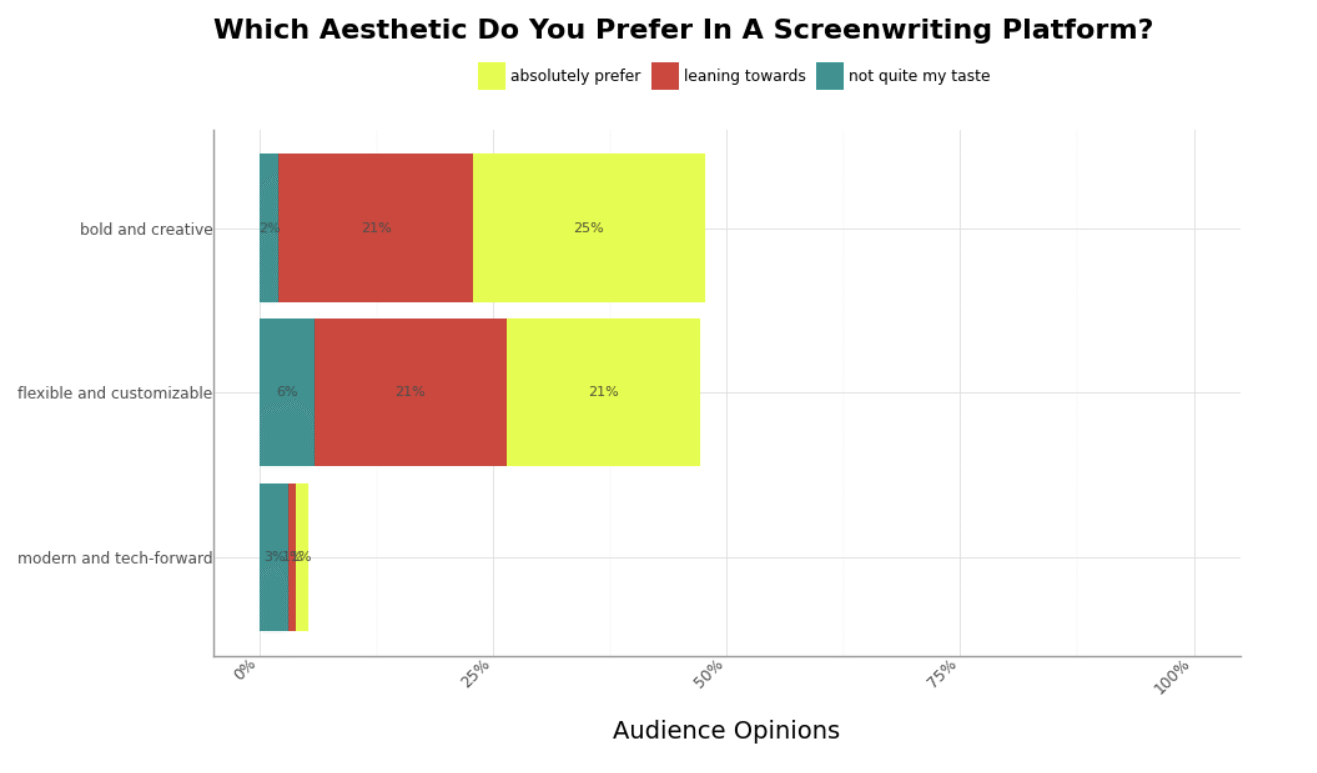
Bold and creative visual design leads, with customization-friendly aesthetics close behind. A modern, tech-forward look appears less preferred for this audience segment.
Which Part Of The Screenwriting Process Is Most Important To Streamline?
Brainstorming ideas is an absolutely crucial part of the screenwriting process for 33% of independent filmmakers
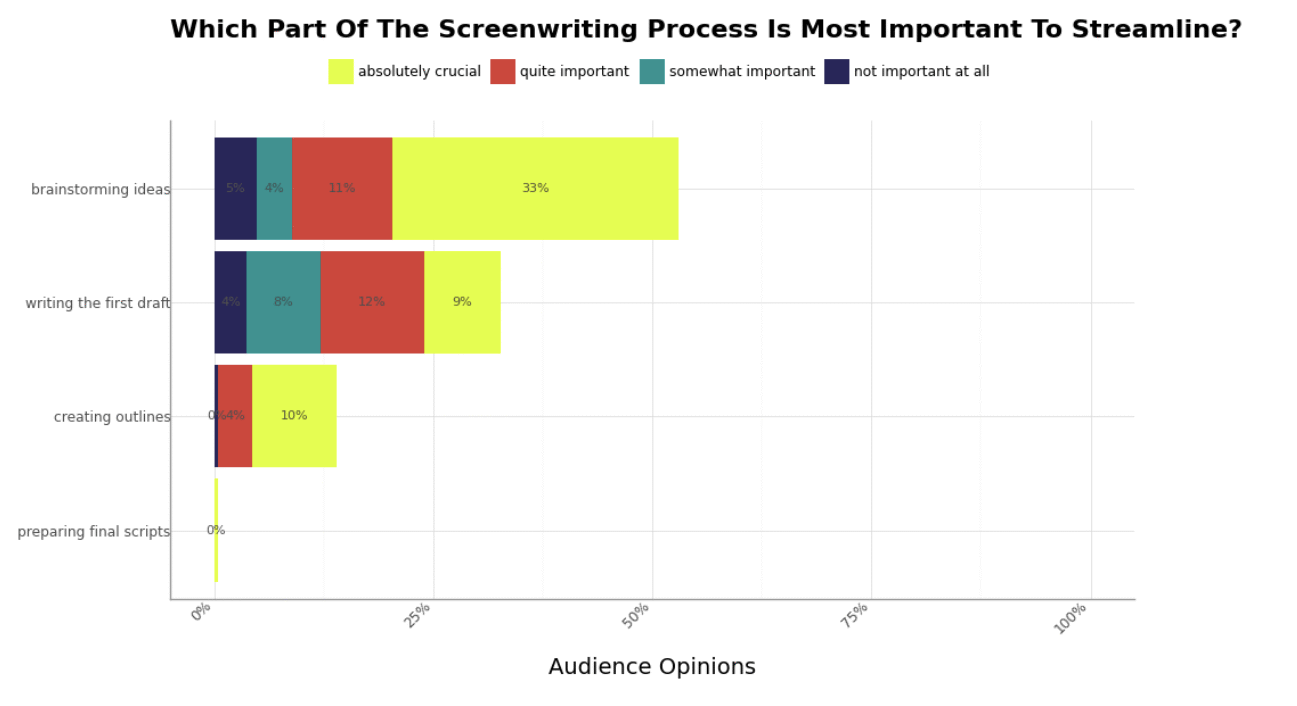
Brainstorming is the top process to streamline, with first-draft writing and outlining as secondary priorities. Preparing final scripts was rarely selected as a major streamlining need.
How Do You Typically Discover New Film Screenwriting Software?
75% of independent filmmakers primarily discover new screenwriting software on screenwriting forums
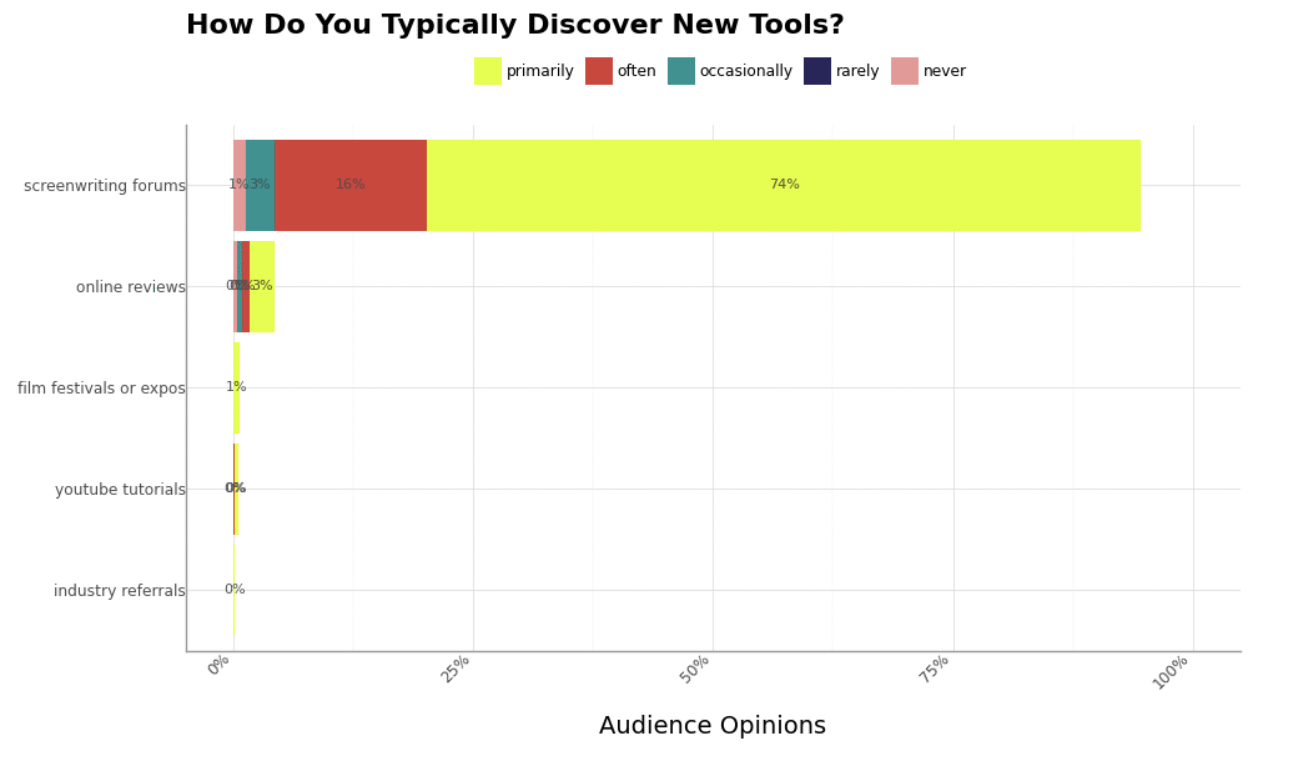
Forums are the dominant discovery channel, with online reviews and events trailing far behind. Peer-led discovery appears central in this market.
What Feature Would You Most Like To See Added To Your Current Film Screenwriting Software?
28% of independent filmmakers want integrated AI solutions added to their current screenwriting software
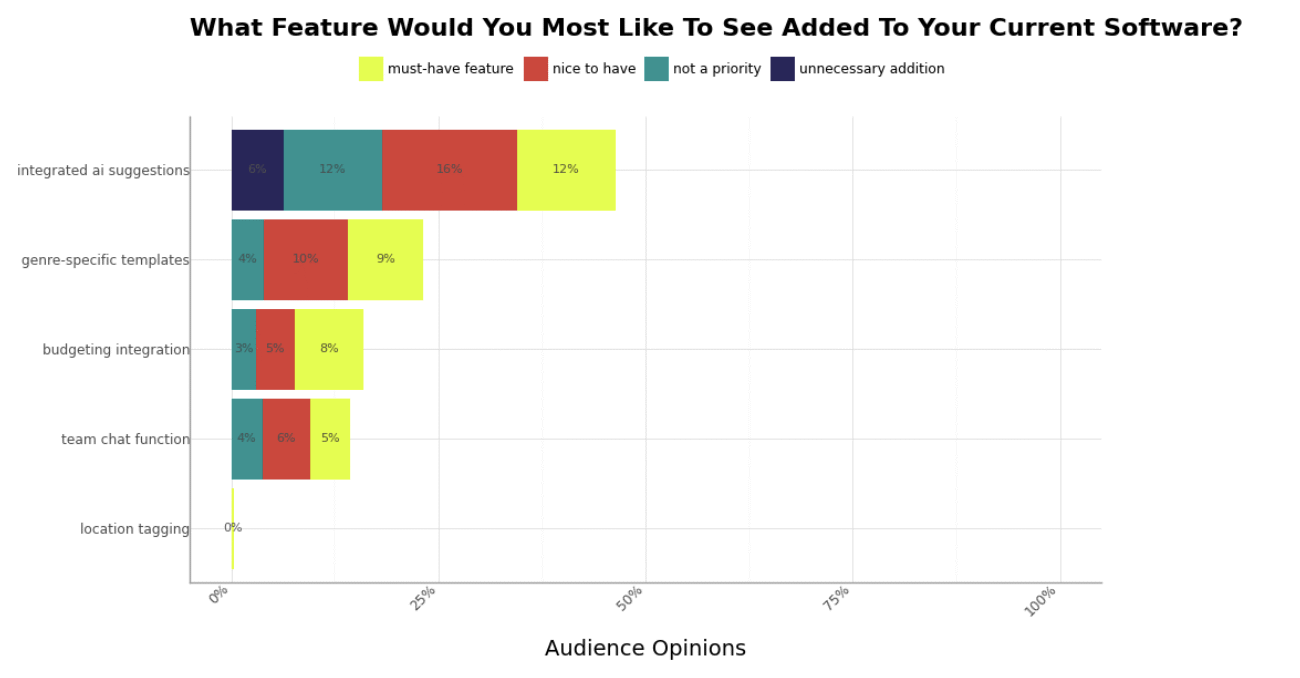
Integrated AI suggestions are the top requested addition. Genre templates and budgeting integration also show demand, while team chat and location tagging appear lower-priority additions.
What Film Screenwriting Software Training Or Support Do You Find Most Useful?
One-on-one demos are an absolutely essential form of screenwriting software training or support for 23% of independent filmmakers
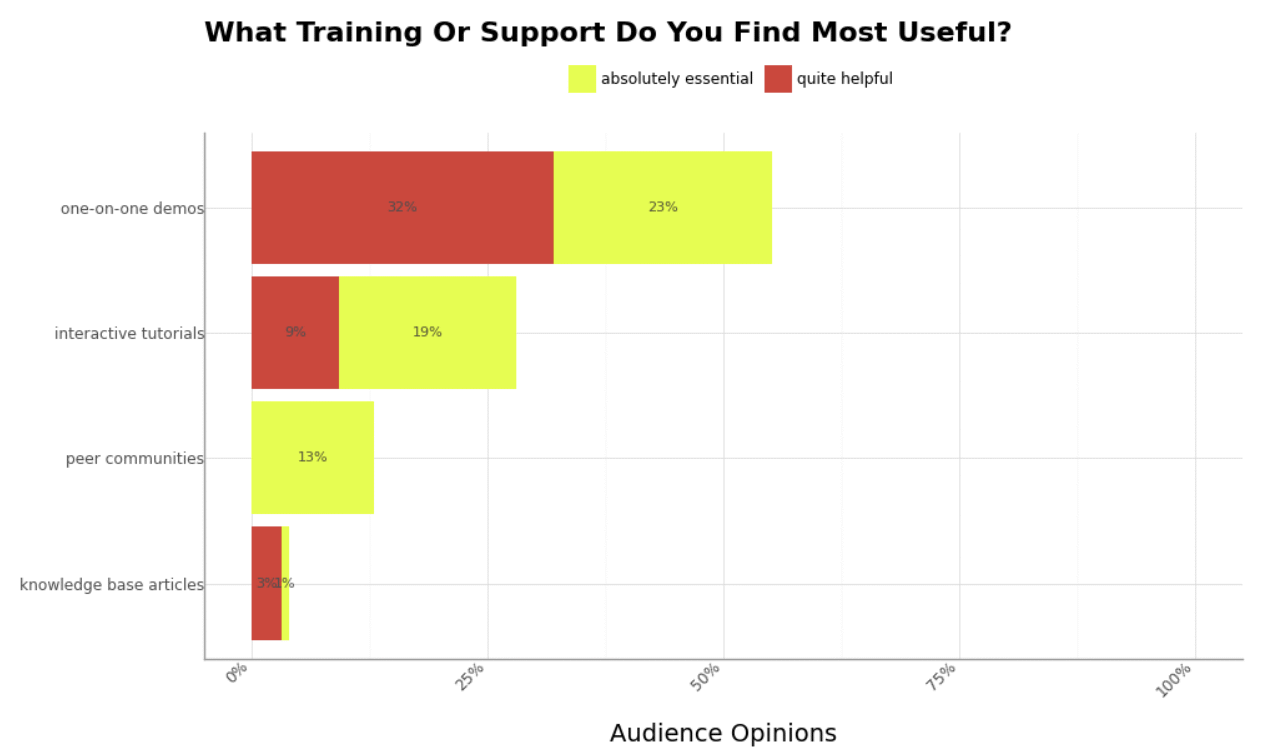
One-on-one demos rank highest for support effectiveness, followed by interactive tutorials. Preferences align with a strong lean toward visual and guided learning formats.
Which Region Best Describes Your Current Location?
32% of independent filmmakers in our audience are likely located in California
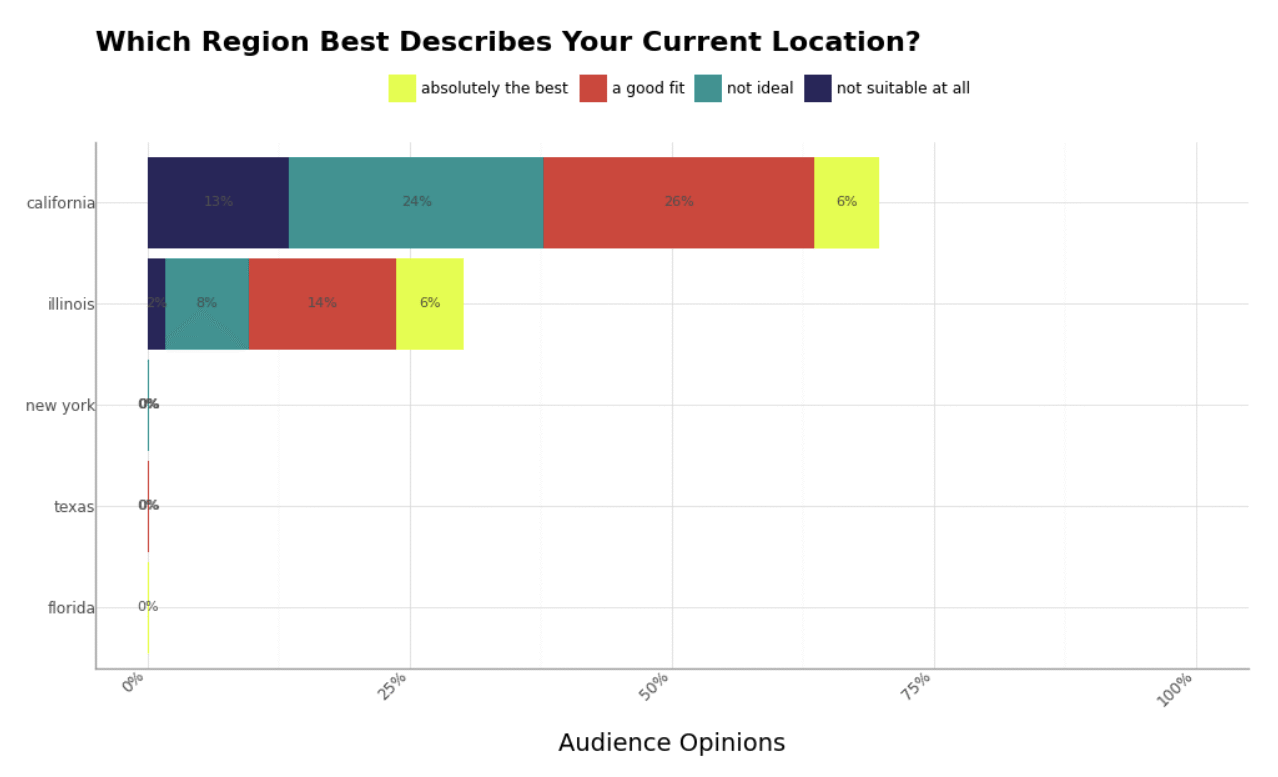
California is the largest represented region in the sample, with Illinois also showing meaningful concentration. New York, Texas, and Florida were not materially represented in this specific audience model.
This research suggests that cost, collaboration, portability, support, and workflow organization shape how independent US filmmakers assess screenwriting software. Use these findings as evaluation criteria, not as a product ranking: the study did not test tools head to head or verify current prices and feature limits.
Methodology
Sourced using Artios from an independent sample of 6,260,767 United States independent filmmakers’ opinions across X, Reddit, TikTok, LinkedIn, Threads, and BlueSky. Responses are collected within a 95% confidence interval and 5% margin of error. Results are derived from opinions expressed online, not direct survey responses.
About the representative sample
Try it in Pzaz